
PERSONALIZED BREAST RESHAPING
Gynecomastia Surgery in Oklahoma City & Tulsa
Excess chest fullness or enlarged male breast tissue can be frustrating, especially when it does not improve with weight loss or exercise.
Gynecomastia surgery, sometimes called male breast reduction, creates a flatter, more defined chest using liposuction, tissue removal, or a personalized combination. Dr. Blatchford will evaluate your anatomy and recommend the approach that best fits your needs and goals.
Oklahoma City • Tulsa
A More Defined Chest Starts With the Right Diagnosis
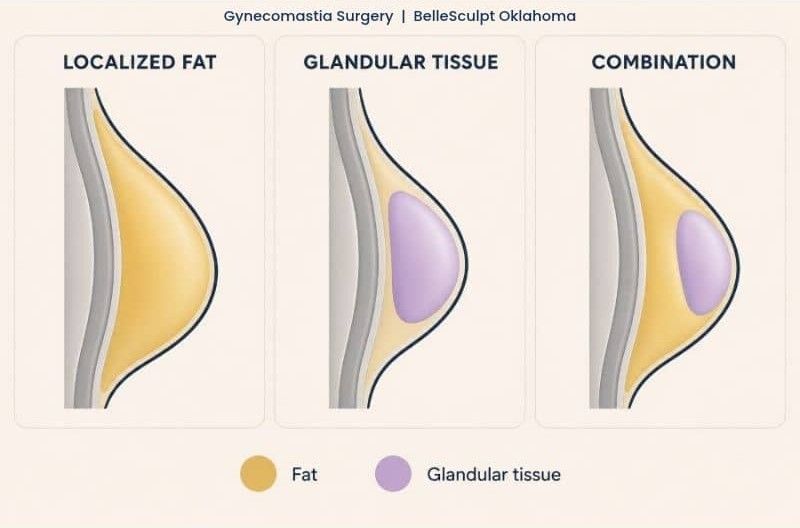
An enlarged male chest is not always caused by the same type of tissue. Some men primarily have localized fat, while others have excess glandular breast tissue beneath the nipple and areola. Many patients have a combination of both.
This distinction matters because fat and glandular tissue are treated differently. Liposuction can remove localized fat, but firm glandular tissue may need to be surgically removed. Loose skin may also need to be addressed in more pronounced cases.
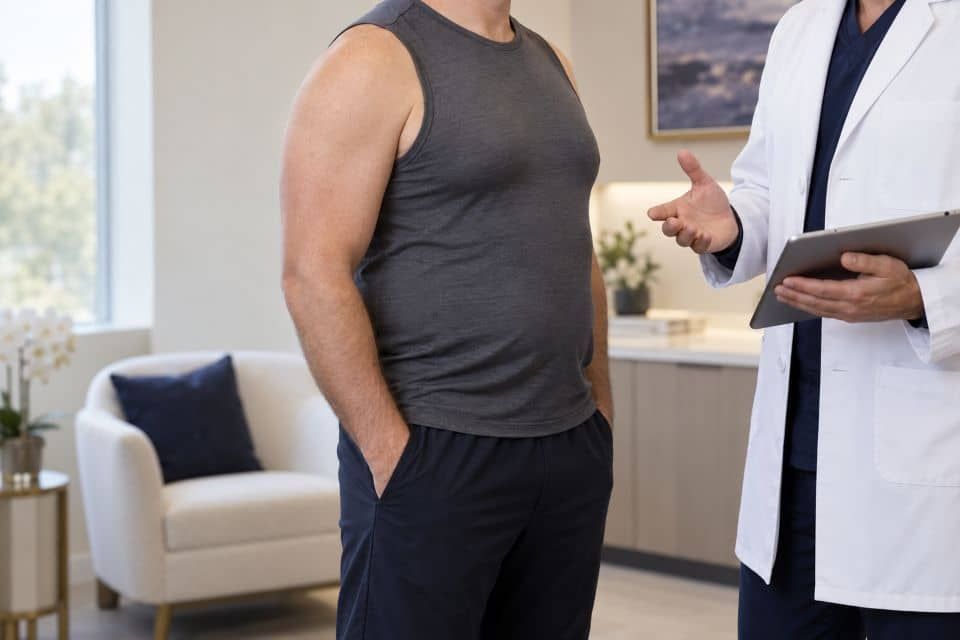
During your consultation, Dr. Patrick "Tyson" Blatchford will evaluate your chest, listen to your concerns, and recommend a personalized approach based on your anatomy and desired outcome.
What Is Gynecomastia?
Gynecomastia is the development of excess breast tissue in men. It may affect one or both sides of the chest and can appear unevenly. Common concerns include:
- Fullness beneath the nipples
- Puffy or enlarged areolas
- A firm area of tissue behind the nipple
- A rounded or breast-like chest shape
- Excess chest fat combined with glandular tissue
- Loose skin after weight loss
Gynecomastia can be frustrating, especially when the chest remains enlarged despite regular exercise and weight loss. It is a medical condition, not a reflection of a person's fitness, discipline, or masculinity.
Gynecomastia surgery, also known as male breast reduction, is designed to remove the tissue responsible for the fullness and create a flatter, more proportionate chest contour.
Is It Gynecomastia or Just Chest Fat?
Chest fat and gynecomastia can produce a similar appearance, but they are not the same.
Excess chest fat
Chest fullness caused mainly by fatty tissue is sometimes called pseudogynecomastia. It may improve when a person loses weight, although stubborn fat can remain even after reaching a healthy, stable weight. Liposuction may be appropriate when localized fat is the primary concern and the skin has enough elasticity to adapt to the new contour.
Glandular breast tissue
True gynecomastia involves excess glandular tissue, which often feels firmer than surrounding fat. This tissue usually does not disappear through diet, exercise, or additional chest workouts. Surgical excision may be needed to remove it.
A combination of both
Many men have both fatty and glandular tissue. In these cases, combining liposuction with direct tissue removal may produce a smoother and more balanced result.
Dr. Blatchford will assess the type and amount of tissue present before recommending a treatment plan.
How Gynecomastia Surgery Works
Male breast reduction is customized to the tissue causing the enlargement. Depending on your anatomy, Dr. Blatchford may recommend liposuction, surgical tissue removal, or a combination of techniques.
Liposuction
Liposuction removes localized fatty tissue through small incisions. It may be appropriate when excess fat is the primary cause of chest fullness and there is little firm glandular tissue.
Glandular Tissue Removal
Firm tissue beneath the nipple cannot always be adequately treated with liposuction. Dr. Blatchford may use an incision near the edge of the areola to remove this tissue directly and improve the contour around the nipple.
Combined Treatment
When both fat and glandular tissue are present, liposuction and tissue excision may be performed together. Liposuction helps shape the surrounding chest while excision addresses the denser tissue beneath the nipple.
Excess Skin Correction
Patients with more pronounced gynecomastia or significant weight loss may also have stretched skin. In selected cases, removing excess skin or repositioning the nipple and areola may be necessary. These techniques require additional incisions and will be discussed during the consultation if they apply to you.
What Can Male Breast Reduction Accomplish?
Gynecomastia surgery may help create a chest that appears flatter, firmer, and better proportioned to the rest of the body.
Depending on the patient’s anatomy and surgical plan, treatment may:
- Reduce enlarged or projecting breast tissue
- Remove stubborn fat from the chest
- Improve puffiness around the nipples
- Create better definition across the chest
- Improve balance between the two sides
- Address loose skin when clinically appropriate
- Make fitted shirts and athletic clothing feel more comfortable
The goal is a natural-looking contour that fits the patient’s build. Results vary, and Dr. Blatchford will explain what surgery can realistically accomplish in your individual case.
Are You a Candidate for Gynecomastia Surgery?
You may be a candidate for male breast reduction if you have persistent chest fullness that has not improved enough through weight management or exercise.
Appropriate candidates are generally adults who:
- Have excess chest fat, glandular tissue, or both
- Are bothered by the size or shape of their chest
- Are at or near a stable weight
- Are in suitable health for surgery
- Have realistic expectations
- Are willing to follow preoperative and postoperative instructions
- Do not smoke or are willing to stop as directed before and after surgery
If your chest has changed suddenly or you have symptoms that could indicate an underlying condition, further medical evaluation may be needed before cosmetic surgery is considered.
The best way to determine whether surgery is appropriate is through an in-person consultation and physical examination.
Your Gynecomastia Consultation With Dr. Blatchford
Your consultation is an opportunity to discuss your concerns privately and learn which treatment approach may be right for you.
Dr. Blatchford will evaluate the amount and location of fat, glandular tissue, and loose skin. He will also consider chest symmetry, nipple position, skin elasticity, medical history, current medications, and your goals for surgery.
Your personalized plan may include:
- Liposuction alone
- Direct removal of glandular tissue
- A combination of liposuction and tissue removal
- Correction of excess skin when appropriate
You will also have an opportunity to discuss incision placement, possible scarring, recovery expectations, risks, and cost. The goal is to give you the information needed to make a comfortable and informed decision.

Recovery After Gynecomastia Surgery
Swelling, bruising, tightness, and tenderness are common during the early part of recovery. These effects generally improve as healing progresses, but every patient recovers at a different pace.
A compression garment may be recommended to support the chest and help manage swelling. Dr. Blatchford will provide personalized instructions regarding garment use, incision care, sleeping position, work, exercise, and other activities.
Most patients need to temporarily limit strenuous activity, heavy lifting, and movements that place pressure on the chest. Your return to work and exercise will depend on the extent of surgery, how your body is healing, and the demands of your routine.
Incisions are required for gynecomastia surgery, so some scarring should be expected. Whenever possible, incisions are positioned along natural contours or near the border of the areola to make them less noticeable. Scars often become less prominent with time, although they do not disappear completely.
Understanding the Risks of Male Breast Reduction
Like every surgical procedure, gynecomastia surgery involves risks. Potential complications may include bleeding, infection, fluid accumulation, changes in nipple sensation, contour irregularities, asymmetry, visible scarring, delayed healing, or the need for additional treatment.
Changes in sensation may be temporary or permanent. Results may also be affected by future weight changes, medication use, hormonal changes, or other factors that contribute to breast tissue development.
Dr. Blatchford will discuss the risks that apply to your planned procedure and explain how BelleSculpt Oklahoma approaches preparation, surgery, and follow-up care. Following all preoperative and postoperative instructions is an important part of reducing avoidable risks.
How Much Does Gynecomastia Surgery Cost?
The cost of gynecomastia surgery varies because treatment is personalized. Your total will depend on factors such as:
- Whether liposuction, tissue removal, or both are needed
- The extent of the correction
- Whether excess skin must be addressed
- Surgical facility and anesthesia-related expenses
- Any other procedures included in your treatment plan
After your consultation, BelleSculpt Oklahoma will provide a personalized quote based on the procedure Dr. Blatchford recommends.
Gynecomastia surgery performed for cosmetic reasons is often not covered by health insurance. Coverage policies vary, so patients seeking insurance benefits should contact their carrier directly.
BelleSculpt Oklahoma offers financing options for qualified patients. Visit our Financing page to review available choices, including application links for our Oklahoma City and Tulsa locations.
Gynecomastia Consultations in Oklahoma City and Tulsa
BelleSculpt Oklahoma provides gynecomastia consultations for adult men in Oklahoma City, Tulsa, and surrounding communities.
Your consultation gives you an opportunity to learn whether your chest fullness is primarily caused by fat, glandular tissue, loose skin, or a combination. Dr. Blatchford will explain your options and help you understand what kind of improvement may be possible.
Gynecomastia Surgery FAQs
Can surgery get rid of "man boobs"?
Gynecomastia surgery can reduce an enlarged male chest when the fullness is caused by localized fat, glandular breast tissue, or both. The correct technique depends on what is creating the fullness. An in-person examination is needed to determine whether liposuction, tissue removal, or a combination would be appropriate.
Can exercise get rid of gynecomastia?
Exercise can strengthen the chest muscles and help reduce overall body fat, but it cannot selectively eliminate glandular breast tissue. If chest fullness remains after weight loss and consistent exercise, gynecomastia surgery may be an option.
How is gynecomastia diagnosed?
Evaluation typically includes a medical history and physical examination. Dr. Blatchford will assess the texture and location of the tissue and look for excess fat, firm glandular tissue, loose skin, and asymmetry. Some patients may need additional medical evaluation before cosmetic treatment.
Is liposuction alone enough?
Liposuction may be enough when excess fat is the primary concern and the skin has adequate elasticity. If firm glandular tissue is present beneath the nipple, direct removal may also be necessary.
Will the glandular tissue be removed?
Glandular tissue may be removed when it contributes to the enlarged or puffy appearance of the chest. The amount removed depends on the patient’s anatomy and the contour Dr. Blatchford is working to create.
Does gynecomastia surgery leave scars?
Yes. All surgical incisions produce scars. Their location and length depend on the techniques required. Incisions may be placed near the edge of the areola or in other areas selected to support the planned correction. Scars usually become less noticeable as they mature, but they remain permanent.
Will I need a compression garment?
A compression garment is commonly used after male breast reduction to support healing and help manage swelling. Dr. Blatchford will tell you whether one is appropriate and how long it should be worn.
How long is recovery?
Recovery varies based on the extent of treatment, the techniques used, and how the individual patient heals. You will receive personalized instructions about returning to work, exercise, lifting, and other activities.
Is gynecomastia surgery covered by insurance?
Coverage varies by insurance plan and the circumstances surrounding treatment. Procedures performed primarily for cosmetic reasons are often not covered. Patients should contact their insurance company directly to understand their policy and requirements.
Can gynecomastia return after surgery?
Removed fat and glandular tissue do not regenerate in the same way, but the chest can change after surgery. Significant weight gain, hormonal changes, certain medications, anabolic steroid use, and some health conditions may contribute to renewed enlargement.
How do I find the right gynecomastia surgeon near me?
Look for a surgeon with appropriate board certification, experience in body-contouring procedures, and a willingness to explain whether your concern involves fat, glandular tissue, skin, or a combination. Your consultation should include a discussion of surgical options, scars, recovery, risks, and realistic expectations.